Selected projects
Work built for consequential decisions.
Four operating environments. The common thread is difficult data, domain-heavy logic and systems that must remain trustworthy after the first successful run.
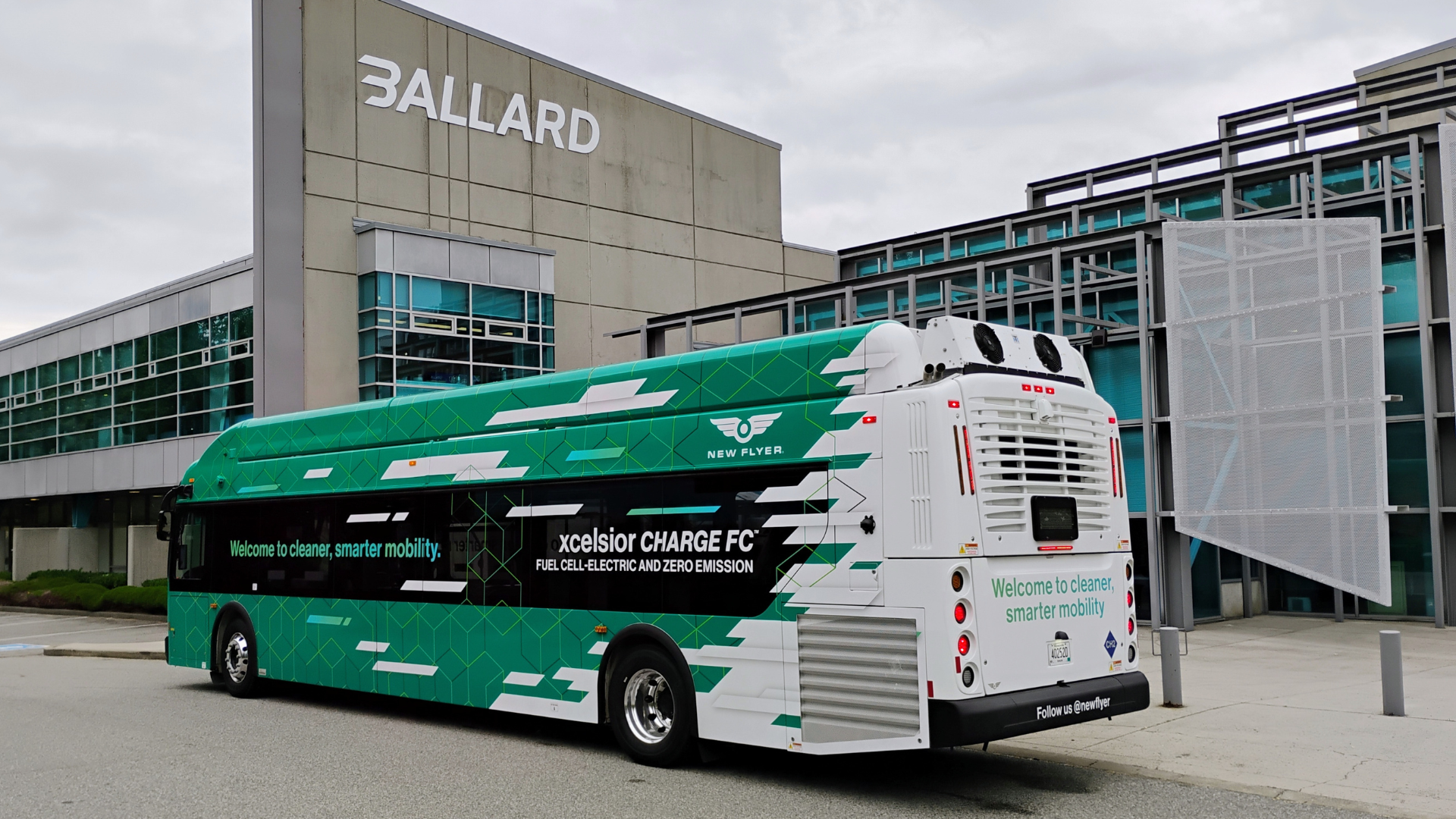
Industry leadership · Ballard Power Systems · 2021—present
 Ballard
From raw fleet telemetry to trusted operating intelligence.
Built and led the data foundation used to analyze a global fleet of fuel-cell buses and modules—connecting hundreds of telemetry signals to engineering KPIs, reliability analysis and fleet decisions.
- Built the daily ingestion system solo, end to end. The Databricks package tracks per-module high-water marks, metadata and processing state across changing datasets.
- Made failure and reprocessing safe. Idempotent reruns, staged writes, two-day backups, health checks and source-to-target reconciliation prevent duplicate or partial loads.
- Handled late and corrected records. Targeted backfills recalculate a safe time margin and propagate affected outputs; complete module history can be replayed when dependencies demand it.
- Turned telemetry into usable products. A scalable framework covers 20+ product types, 500+ tags and 50+ KPIs, with 15+ Power BI dashboards supporting engineering and management.
- Extended the platform into applied AI. Work includes anomaly detection, forecasting, failure prediction and a Databricks-based RAG assistant for technical knowledge.
Consulting engagement · BC Hydro · 2017—present

Replacing fragile reliability analysis with an auditable planning platform.
For BC Hydro Energy Planning, developed SHARE: a reliability and resource-adequacy platform that turns complex uncertainty into repeatable, reviewable planning evidence.
- Rebuilt a legacy analytical workflow as a maintainable Python and SQL system with explicit inputs, assumptions and traceable outputs.
- Modelled correlated demand, resource availability and system states using Monte Carlo methods, Markov processes and copulas.
- Created validation, scenario comparison and reporting layers so planners can explain how each result was produced.
- Supported a continuous consulting relationship spanning Energy Planning and selected Generation System Operations work.
Reliability models inform long-horizon resource decisions. The platform makes those decisions easier to reproduce, challenge and defend.
Consulting via Theory and Practice · Infrastructure Ontario · 2020—2021

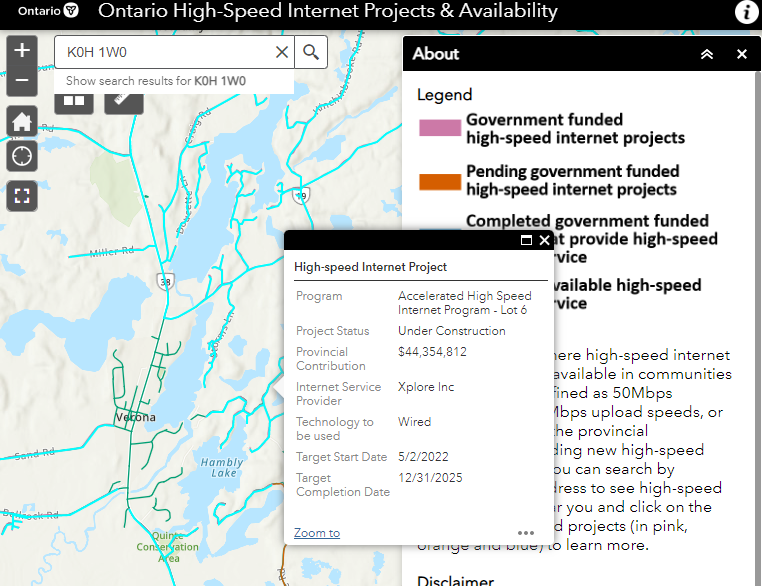
Accelerated High-Speed Internet Program (AHSIP)
Spatial intelligence for a province-wide reverse auction.
Built the geospatial data and feature foundation used to divide Ontario into balanced broadband bidding lots—so providers could compete for subsidies across defined service areas.
- Collected and reconciled public census, development, settlement, connectivity and infrastructure datasets from government sources.
- Designed PostGIS schemas and dbt transformations, then wrote SQL feature pipelines for hexagonal spatial blocks.
- Combined connectivity and development features into a representative score that could be profiled and used by clustering and optimization methods.
- Helped design the lot-forming strategy, including spatial clustering and score-based seed selection; the core optimization implementation was written by the project’s lead data scientist.
- Took over model execution after the lead’s departure, corrected defects, reran calculations and supervised three junior analysts on exploratory and query work.

Public program context
Infrastructure Ontario reports that AHSIP’s reverse-auction process awarded contracts to eight internet service providers, covering up to 266,000 unserved and underserved homes and businesses across as many as 339 Ontario municipalities. These are program-level outcomes, included to establish the scale of the initiative.
Consulting via Theory and Practice · G&F Financial Group · 2020—2021

Trustworthy customer analytics from difficult monthly data.
Created the ingestion and analytical workflow for masked financial-customer records, then used the resulting longitudinal data to identify patterns, segments and anomalies.
- Built Python ingestion for monthly SQL Server and CSV deliveries into PostgreSQL, managing schema differences and difficult file behaviour.
- Added load metadata, count checks and source-to-target reconciliation so every monthly refresh could be verified.
- Reconciled panel data across periods and applied regression, logistic regression, clustering, segmentation and anomaly detection.
- Converted one-off analytical work into a repeatable process suitable for new customer records each month.
Have a related problem?
Start with the system, the data and the decision.
AP Analytics can help diagnose the path from unreliable inputs to a production-ready analytical system.
Discuss a project